

The difference between Raw Honey and Commercial Honey
Honey is an essential food in most families who tend to consume products that are as healthy and beneficial for the body. The choice of honey must be a conscious one, including due to the fact that the market offers a variety of varieties of honey, obtained from several types of flowers. Recently, the term raw, raw or unpasteurized honey has been used more and more among honey lovers. In this article we aim to briefly explain the difference between these two types of honey.
- What is the difference between raw and commercial honey?
- Which honey is more nutritious?
- Cum determini mierea crudă și cea pasteurizată?
The difference between Raw Honey and Commercial Honey
Raw honey (raw honey) is raw honey, being unprocessed. This type of honey includes pollen and propolis particles that increase the nutritional value of the final product. Honey retains all its vitamins and nutrients, due to the fact that it is not heated in the pasteurization process. Raw honey is obtained by extracting from the capped and matured combs, after which it is filtered through nylon or food grade stainless steel filters, in order to be cleaned of the wax particles that appear after the combs have been peeled off. Then, the honey is decanted for 24 hours and finally the raw honey is bottled and ready to be enjoyed.
By comparison, bee products sold in stores are pasteurized at high temperatures to maintain their fluidity throughout the shelf life in trade networks. The pasteurization process itself, which consists of several stages, aims to remove the pollen and propolis left in the honey. Pasteurization takes place by heat treatment of honey (above 60 degrees C), which has the effect of reducing moisture levels, destroying glucose crystals and yeast cells in honey. As a result, honey loses its natural capacity to crystallize and the shelf life (fluidity) of commercial honey is extended. After pasteurization, filtration follows, which also represents the excessive decantation of the honey. At this stage, impurities, such as debris and air bubbles, are removed so that the honey remains as a clear liquid for longer. This is more aesthetically appealing to many consumers. Some types of commercial honey are further processed by ultrafiltration, a refining process to make honey more transparent. All these steps have the role of clearing the honey, but, unfortunately, the most beneficial enzymes and antioxidants in honey are eliminated.
Which honey is more nutritious?
As mentioned earlier, commercial honey does not have these beneficial and antioxidant elements due to the extensive pasteurization process. In numbers, raw honey contains 4.3 times more nutrients than processed honey. As an example, only nectar and pollen found in raw honey is extremely nutritious, thanks to the 250 nutrients, such as vitamins, amino acids, essential fatty acids, micronutrients and antioxidants. Thanks to nutrients, pollen has been recognized in Germany as a medicine, and in the resources published by the National Library of Medicine in the United States, the largest medical library in the world, the benefits of pollen are reconfirmed. Unfortunately, processing methods, such as heat treatment and ultrafiltration, can remove bee pollen. Thus, raw honey contains a wide variety of nutrients, about 22 amino acids, 31 different minerals and a wide range of vitamins and enzymes. In addition to the impressive number of nutrients, it also contains about 30 categories of bioactive plant elements, called polyphenols, which act as antioxidants. According to health professionals, the antioxidants contained in raw honey are beneficial for diseases such as inflammation or heart disease.
How to Choose Honey
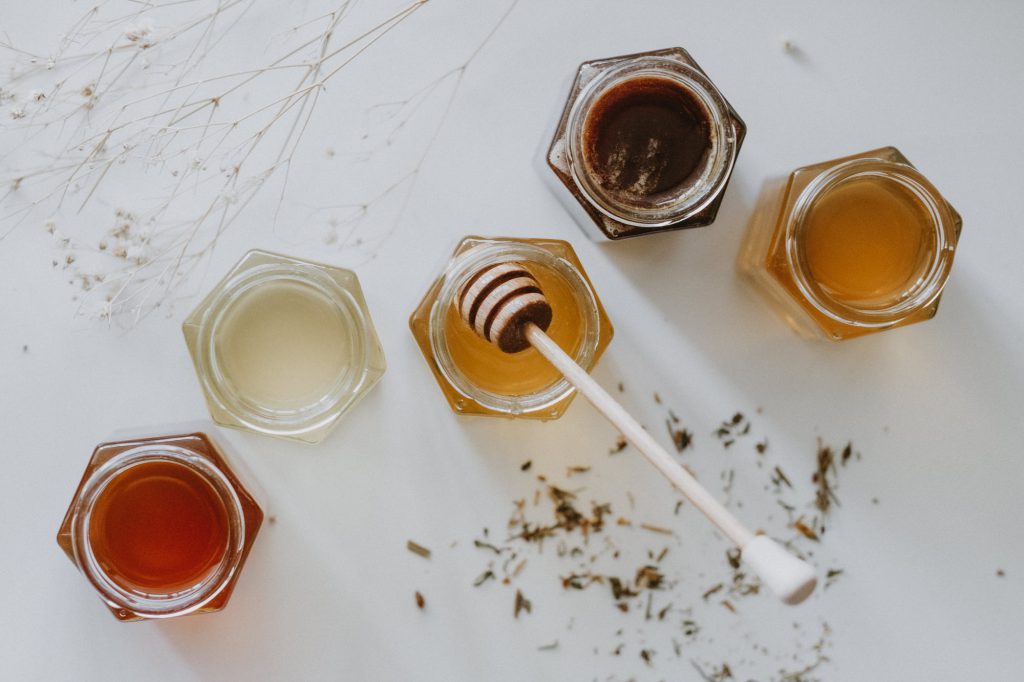
In large stores, commercial honey prevails on the shelves, but there are also happy cases when retailers offer really healthy alternatives and support local producers. To make sure you make the right decision and buy raw honey, study the label. Beekeepers who produce raw honey mention this on the product label. Identify the inscription “100% raw” or “unpasteurized”. The words “organic” or “natural” also indicate that honey is completely natural.
After analyzing the label and identifying the necessary concepts, examine the container of honey more closely. Raw honey has a more cloudy and creamy texture than usual. Sometimes consumers have the false opinion that this honey is not good because of the way it looks. However, the reality is completely different. Raw honey will crystallize, and to stop the process you need to put the jar in hot water (maximum 40 degrees C) until it becomes liquid again. It is important to take into account the temperature so as not to destroy the nutrients.
Apinatur does not pasteurize honey, so all the nutrients of honey are preserved. We only work with local beekeepers to obtain bee products, including raw honey, of the highest quality. See the Apinatur product range.