

Bee pollen
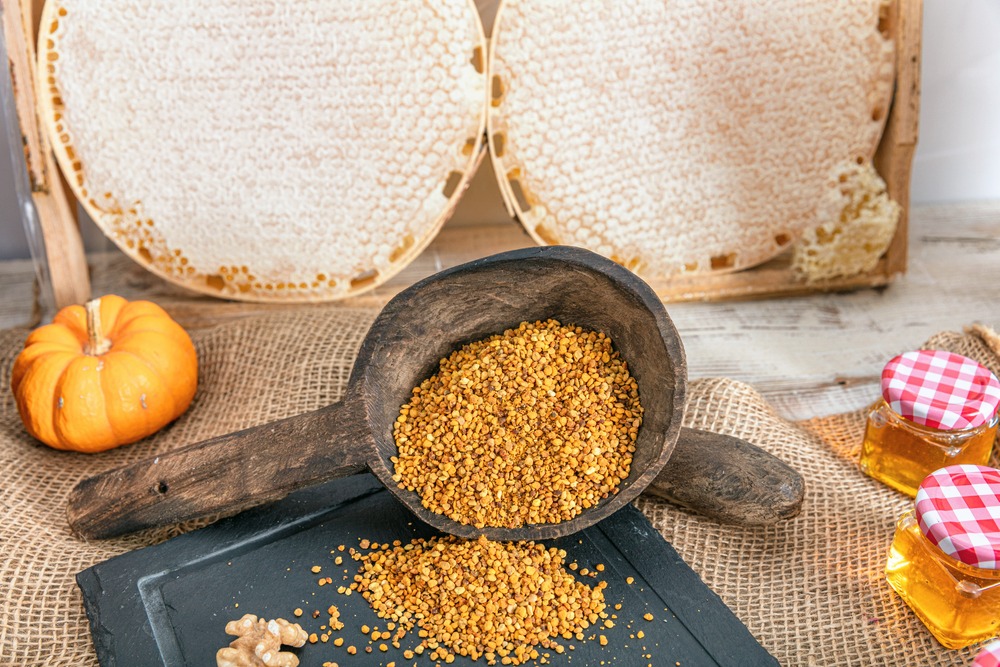
Bee pollen is a combination of nectar and plant pollen that collects on the hind legs of bees. The bees bring this mixture into the apiary, then deposit the pollen in the honeycomb cells and a type of fermentation follows. Vegetable pollen comes from various plants, including buckwheat, corn and even pine, and this influences the pollen obtained.
Pollen is different from apitoxin (bee venom) or honey, but it is a form of apitherapy. Regarding the nutritional profile, from specialized articles we find that up to 50% of bee pollen is made up of polysaccharides, for example, complex carbohydrates. Pollen also contains lipids, proteins, simple sugars, vitamin C and antioxidants – carotenoids, phytochemicals, flavonoids, quercetin and asrutine.
What are the benefits of pollen?
Due to its undeniable benefits, pollen has been considered a medicine by the German Federal Ministry of Health. This decision is confirmed and supported a lot of scientific studies, among which the one published in 2016, by the Chemical Industry Company, based in London.
Pollen is a good anti-inflammatory, thanks to the elements and complexes in the composition. As an anti-inflammatory, bee pollen acts by retaining the action of ferments that cause inflammatory processes.
The anti-inflammatory action of fl vonoids may result from the activity of quercetin, which is known to inhibit the metabolism of arachidonic acid. A decrease in the level of peanut acid reduces the level of inflammatory prostaglandins and ensures the anti-inflammatory effect. Thus, local pain is eliminated.
It contributes to the rapid healing of wounds, due to the antibacterial properties that regenerate the affected tissue in a short time. The antibacterial effect of pollen is associated with the property of glucosoxidase, an enzyme produced by bees. This is added to the pollen when pollen granules are formed. Moreover, it has been shown that the microbiological activity of several components fights bacterial and fungal cells, which degrade the cytoplasmic membrane.
Pollen has hypolipidemic activity, ie it decreases the total content of lipids, triacylglycerol and cholesterol. This beneficial property contributes to positive effects in the case of heart disease, by reducing blood density and the intensity of atherosclerotic plaque formation.
Bee pollen can lower high cholesterol, according to medical studies this year 2017 and 2018. Supplementing the diet with pollen extract in doses of 0.1 g / kg body weight (BM) and 1 g / kg BM led to a decrease in total cholesterol by approx. 33%.
Pollen has a detoxifying action, which reduces the level of enzymes. The detoxifying effect of pollen is associated with the flavonoids in the composition. Pollen extract is recommended in case of acute, chronic diseases, in initial and degenerative conditions, for cholestatic liver diseases, but also in intoxications.
A study conducted in 2013 shows that bee pollen protects the liver from damage caused by alcohol and other harmful substances.
Pollen is also useful in osteoporosis, due to the fact that it increases the amount of calcium and phosphate, which protects against bone loss related to osteoporosis.
Bee pollen strengthens the immune system and enhances the antiallergic reaction. This bee product treats seasonal allergies and increases resistance to potential allergens. A study published in 2008 in the Journal of Medicinal Food showed that bee pollen can inhibit the activity of mast cells, a class of cells involved in the release of histamine, which is a response to allergens and therefore triggers the symptoms associated with allergies.
Way of ussage
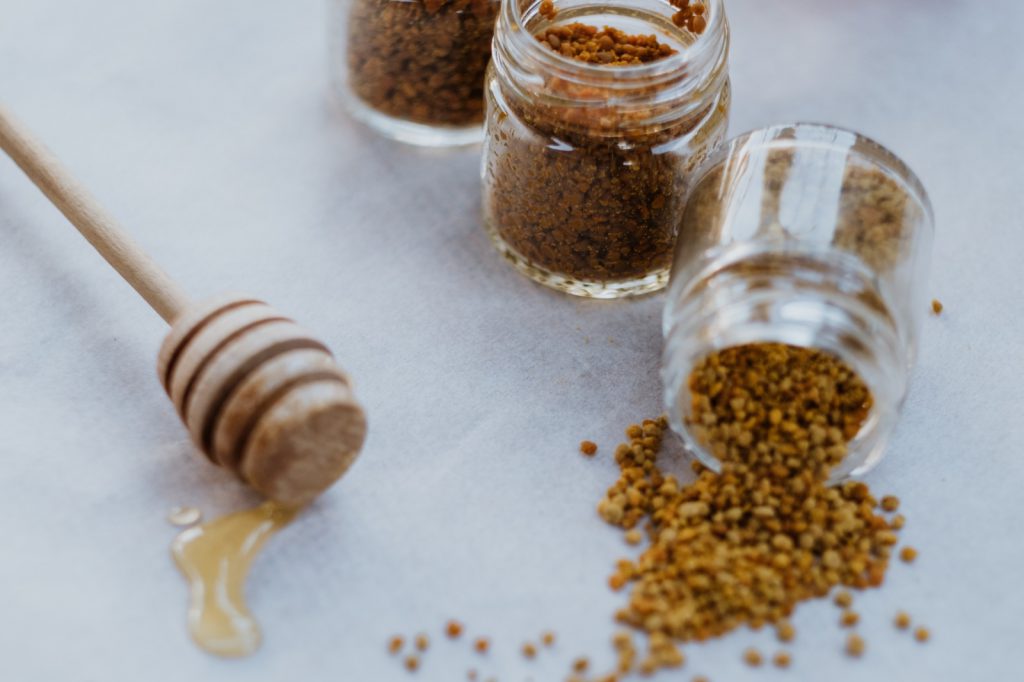
Bee pollen is commercially available in the form of granules and is recommended to be initially consumed in by of a teaspoon. Subsequently, the dose may be gradually increased to 1 teaspoon daily. For the little ones, it is recommended to start with a few granules, but it is not recommended for children under 12 months.
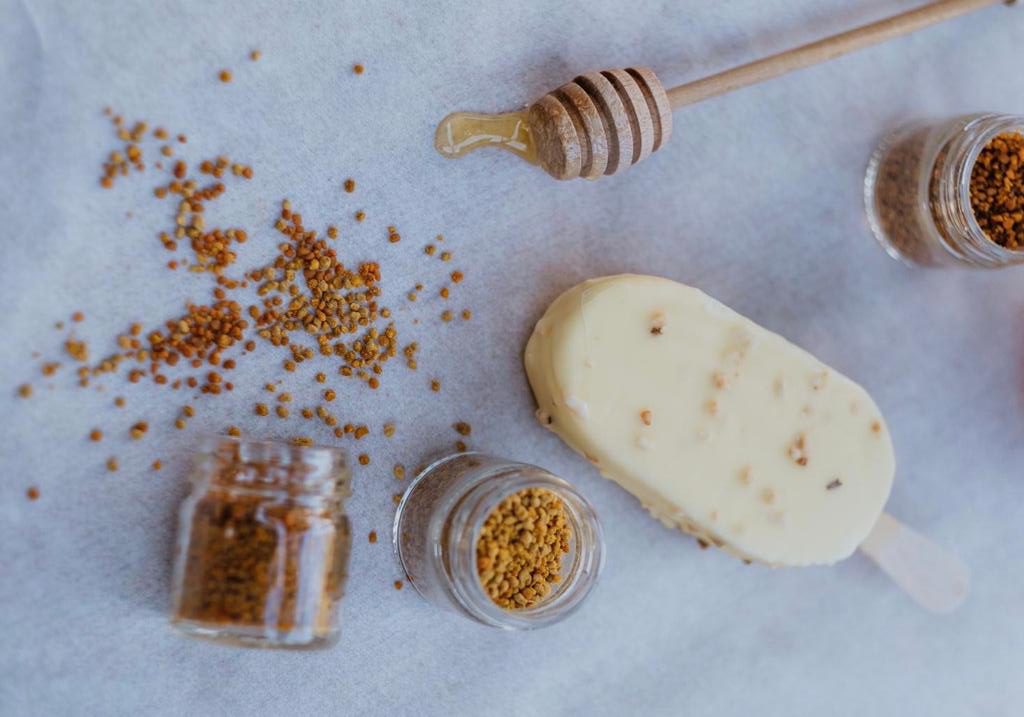
The duration of administration is at most 30 days. Another way of administration is the combination with honey, cereal, yogurt, granola or in smoothies. Bee pollen should be stored in a cool, dark place, such as a pantry, refrigerator or freezer, away from moisture and direct sunlight.
Contraindications and potential allergies
The biggest safety issues are allergic reactions. Bee pollen can cause severe allergic reactions in people allergic to flower pollen.
Pollen is not recommended for pregnant or lactating women. This product is dangerous for pregnant women because it can cause uterine contractions.
It is essential to take into account the condition of the body and to act promptly on any unusual symptoms, such as itching, inflammation, difficulty breathing or severe reactions of the whole body (anaphylaxis).